Selling a multi-family home through probate in New Haven: what your family should know.
Most families I work with picture a probate home as a single-family house. But here in New Haven, the family home is often a two- or three-family building, with tenants upstairs and a lifetime of memories spread across every floor. If that is your situation, you are probably holding two questions at once: how does the probate process work with the building, and what happens to the people who live in it? This guide answers both, with the current 2026 market context, so your family can move forward with clarity and compassion.
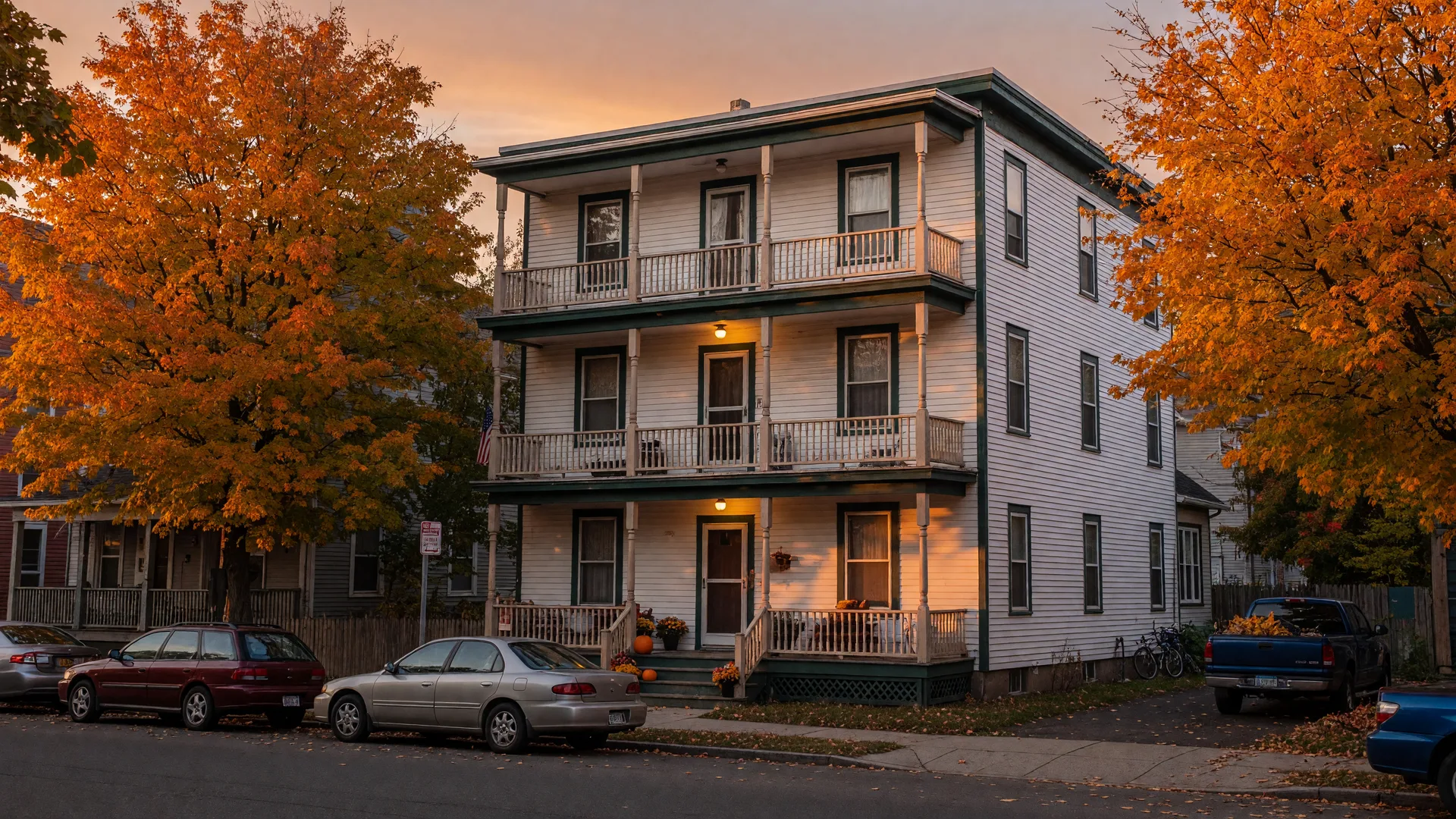
The New Haven multi-family tradition and what it means for probate.
New Haven is one of the few cities in the country where the classic family home is often a two- or three-family house. Three-deckers with stacked porches line streets in East Rock, Wooster Square, Fair Haven, and beyond. Generations lived in one unit while renting the others, and the building became a quiet family asset that paid its own way. When the owner passes, the building does not stop being a home for the people upstairs just because an estate has opened.
That is the first thing I want you to feel: your family is not alone in this. Renting is the norm here. Roughly 7 in 10 New Haven households rent, and well-kept multi-family buildings have drawn steady interest from both owner-occupants and small investors for years. That demand has held through 2026, which matters when the estate needs a fair, timely sale.
$385K
New Haven median sale price
The most recent six-month review of New Haven closings put the median at $385,000, with homes selling in about 48 to 49 days on average (Resideline, Redfin).
~$550K
Median multi-family list price
About 75 two- and three-family homes were listed in New Haven at a median list price near $550,000, with two-family listings ranging roughly $330K to $525K (Redfin).
$450K
CT multi-family median sale
Statewide, the multi-family median sale price in early 2026 reached $450,000, up 7.1% year over year, with sales moving in about 15 days (The CT Market Edge).
A note on the numbers: New Haven's overall median covers every home type, while two- and three-family buildings trade in their own brackets, driven largely by how much rent they produce. And with Connecticut's average 30-year fixed mortgage rate near 7.2 percent in mid-October 2026 (NerdWallet), buyers are careful with their numbers. Even so, demand for income-producing homes has stayed resilient, and a multi-family building priced with current data and presented honestly should attract serious interest.
Practical takeaway: the market for these buildings is real and steady right now, which is genuinely good news for an estate that needs to sell. If you would like to see how recent sales have landed in your family's neighborhood, whether that is East Rock, Wooster Square, or Fair Haven, I would be glad to walk you through the data.
What changes when the family home is also a rental property.
A lease does not end when the owner passes away. The estate steps into the landlord's position, which means tenants' leases generally continue, rent continues to be owed to the estate, and the executor is responsible for running the building through the process. Here is how that looks in practice:
- The executor takes the keys and the duties. Once the court appoints the executor, that person manages the property: collecting rent, keeping utilities in service, arranging repairs, and answering tenants' questions. Nothing about the building should be signed or committed before the appointment is official.
- Tenants keep their homes. A lease binds the estate, and a tenant cannot be displaced simply because the owner died. If the family hopes to sell the building vacant, moving tenants out must follow Connecticut law, which is why an early conversation with a probate attorney matters before any notice is given.
- Rent flows to the estate. Until closing, rent belongs to the estate and helps carry the building's taxes, insurance, and upkeep. Keeping a simple, dated record of rent received makes the court's final accounting much easier for everyone.
- Security deposits stay protected. Deposits belong to the tenants and must be accounted for, usually transferring to the new owner at closing with the proper paperwork. Never let a deposit get mixed into general estate funds.
- Insurance changes the moment ownership does. A homeowner's policy is not enough once the owner has passed. The estate typically needs rental or vacant-property coverage, and any empty unit must be disclosed to the insurer. Our guide to protecting a probate property walks through insurance, taxes, and utilities.
- Local rules keep running. Renovated or original, a New Haven rental building must stay in good repair with working smoke and carbon monoxide detectors, and Connecticut's lead safety law applies to buildings constructed before 1978. The city's Residential Rental Business License covers most rental buildings, though owner-occupied two- and three-family homes are exempt; the executor should confirm exactly what applies to the estate.
None of this has to be figured out alone. An experienced local agent and a probate attorney can lay out exactly what the building needs, so the family is never guessing from one week to the next.
Who can act: the executor and the court.
In Connecticut, only the court-appointed executor or personal representative has the authority to list and sell an estate's real estate. That is true for a single-family house, and it is equally true for a two- or three-family building. A typical multi-family probate sale looks like this:
- 1Executor appointment (2-4 weeks). The probate court appoints the executor, who then has the legal authority to act for the estate. Still learning the role? Our guide to the executor's responsibilities covers it step by step.
- 2Inventory filing (within two months). A complete inventory of estate assets, including the probate appraisal of the building, is filed with the court.
- 3Listing the building (anytime after appointment). You do not need to wait for the inventory filing. As soon as the executor is appointed, the estate can list, which matters when you want to capture the right buyer pool.
- 4Marketing and offers (4-8 weeks). New Haven homes average around 49 days on market, and two- and three-family buildings with solid rent rolls often attract investor interest within the first weeks.
- 5Court confirmation (2-4 weeks, if required). Many Connecticut probate courts hold a confirmation hearing to approve the sale, with a minimum bid and overbid rules that protect every heir. Our guide to the confirmation hearing explains what to expect.
- 6Closing (4-6 weeks after an accepted offer). The sale closes on the usual real estate timeline, tenant security deposits transfer with the deed, and the proceeds are distributed according to the court's instructions.
From appointment to closing, the process typically spans four to six months. Every estate moves at its own pace, though, and our guide to how long probate takes in Connecticut goes deeper into the timeline stages.
Pricing a multi-family probate property.
Pricing a two- or three-family home is genuinely different from pricing a single-family house, and it is one of the places I add the most value for families. Buyers of multi-family buildings do not just compare homes, they estimate the income. The rent roll, current leases, unit mix, how utilities are split, and the condition of each floor all shape what a buyer will pay.
The probate appraisal, which must be filed with the court, is an official valuation of the estate's asset. It is not the same thing as the listing price. At listing time, your agent should build a fresh comparative market analysis from recent closed multi-family sales and the building's income, so the price reflects the market your family is selling into, not a document prepared months earlier. Our guide to probate appraisals in Connecticut explains the difference clearly.
Honest pricing matters even more when mortgage rates sit near 7 percent, because investor buyers run the numbers before they walk through the door. Price the building against recent multi-family sales, present the rent roll cleanly, and the market will respond.
Watch: Pricing a Probate Property
For a multi-family building, the list price is built from two things at once: what comparable homes sold for, and what the building earns. This short video explains how to approach that number with confidence so the estate captures full value, whether the property sits in Wooster Square, East Rock, or anywhere across Connecticut.
Sell with tenants or sell it vacant?
One of the first strategic questions families face is whether to market the building with tenants in place or after it is vacant. There is no single right answer, but the tradeoffs are clear and worth weighing early:
- With tenants: the investor pool. Many New Haven multi-family buyers are small investors who value a building that already produces income. A tenanted building can sell quickly to a cap-rate buyer, and rent keeps flowing into the estate while the court process unfolds.
- Vacant: the owner-occupant pool. Buyers who plan to live in one unit and rent the others usually want an empty building. Vacancy also makes showings simpler and sometimes draws a stronger price, but it adds carrying costs and requires legally proper move-outs, so plan the timing carefully.
- Empty units need winter protection. We are heading into the colder months, and any unit that sits empty should be winterized, with heat maintained or pipes drained and a vacant-property insurance policy in place. Our guide to winterizing a probate home covers the checklist.
- The court protects the value either way. When confirmation is required, the sale price is reviewed to be fair to every heir, whichever buyer pool the property draws from. That safeguard lets families make the strategic choice without worrying that an offer will slip through unreviewed.
In my experience, the strongest plan is often an honest middle path: prepare the building for owner-occupant appeal where it is practical, market it to both investor and owner-occupant buyers, and let the offers tell you which pool values it most. Our guide to selling a probate home as-is also addresses how much work a building truly needs before it lists.
The people in the picture: tenants, memories, and care.
Behind every two- or three-family home there are people: a tenant who was like a neighbor to your parent, a unit where someone took their first steps, a porch where generations sat on summer evenings. Caring for those people and those memories is part of the work, and it is often what families remember most about the process.
- Talk to the tenants early. Tell them what is happening, that their lease is respected, and that they will receive proper notice and honest updates. Most tenants are anxious about being displaced; a kind, clear conversation transforms the relationship.
- Include far-away siblings. If some heirs live out of state, share photos and updates so everyone feels part of the decisions. Our guide for out-of-state heirs has practical ideas for staying connected.
- Give yourselves grace. There is no external deadline for sorting belongings. The family decides the pace, and taking a beat before big decisions about the building almost always leads to a better outcome, for the estate and for everyone in it.
Why probate experience matters with a building this size.
Selling a two- or three-family home through probate sits at the intersection of two complicated processes, estate administration and income-property sales. The documents, the court deadlines, and the people involved, grieving family members and tenants with leases, need a different kind of guidance. That is the work I love doing.
An agent who understands both sides can help your family:
- Coordinate with the executor, probate attorney, and court so every requirement is met before listing.
- Price the building from fresh market data and its rent roll, not an outdated appraisal or an emotional attachment.
- Prepare for court confirmation and manage tenants, showings, and disclosures with patience and professionalism.
- Communicate clearly with every heir and every tenant, so no one is left guessing.
- Bring the building to the right buyers, investor and owner-occupant, at the right moment in the market.

Robert Clarke
Coldwell Banker Realty · 24 Washington Ave, North Haven, CT 06473
(203) 936-9004 ·
rob@robandvicCT.com
I serve families in New Haven, Hamden, North Haven, Branford, Milford, and surrounding Connecticut communities. If you are caring for a loved one's multi-family home this season, I would be honored to help your family navigate the process with patience and care.
Your practical takeaways for a multi-family probate sale.
Whether you are just beginning the probate process or an executor has already been appointed, here is what I want your family to remember:
- ✓A lease can outlive the owner. The estate steps into the landlord's shoes, rent continues to the estate, and tenants cannot be displaced without proper legal process.
- ✓Only the executor can sell. Court appointment comes first, inventory second, and listing as soon as the executor is authorized, no reason to wait for the filing.
- ✓Price the income, not just the comps. Multi-family buyers underwrite rents, leases, and unit mix, so present the rent roll cleanly and price with fresh market data.
- ✓Choose tenanted or vacant early. Investors want the income, owner-occupants want an empty building; the court reviews the final price either way to protect every heir.
- ✓Keep the building safe and legal. Right insurance, working smoke and carbon monoxide detectors, lead safety for pre-1978 buildings, and protected security deposits protect the estate and the tenants.
- ✓You are not alone in this. New Haven families manage multi-family probate sales every year. With the right plan and the right team, you can move through this chapter with confidence and peace of mind.
If you have questions about your family's specific building, I invite you to reach out. There is no obligation and no sales pitch, just a conversation about your needs and how we can make the probate real estate process as smooth as possible.
Want to talk about your specific situation?
Whether you are just starting the probate process or ready to list a two- or three-family home, I am here to help with honest, compassionate guidance.